
Markets
Biomedical & Life Sciences Electrical Construction
Research and life-sciences facilities run on power that has to be clean, redundant, and precisely coordinated with the science it serves. For more than twenty years H&M Electric has wired the laboratories, cleanrooms, vivariums, and biomedical equipment rooms where a dropped circuit can ruin an experiment, spoil a sample library, or halt a validated process. It is a major, specialized part of what we do — and very few Washington contractors bring this depth to it.
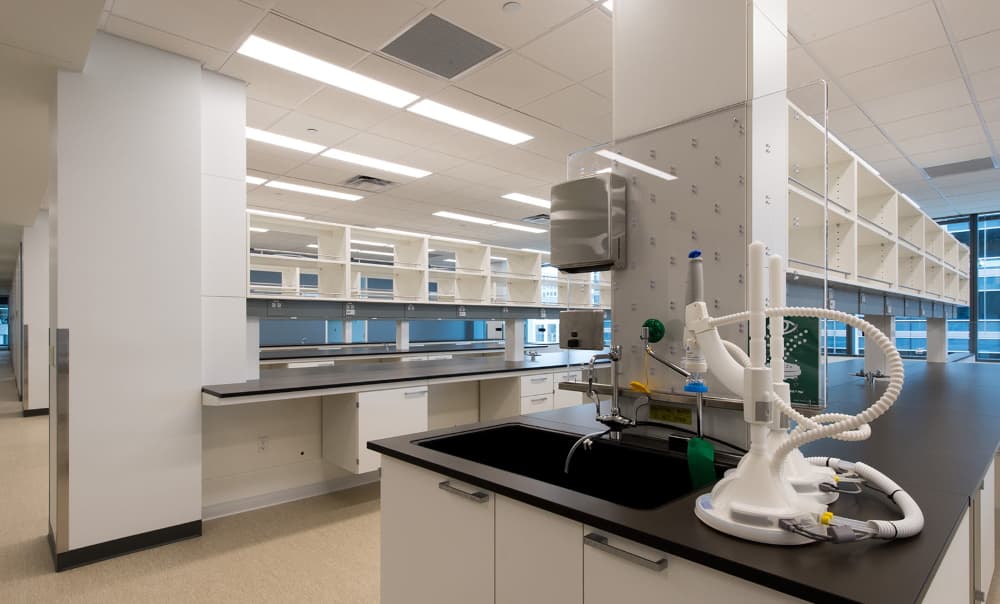
Research and clinical laboratories built around the bench
A working laboratory is a dense grid of power. Every bench needs reliable receptacle circuits at the right heights and spacing, fume hoods need dedicated power and interlocks tied to the exhaust and monitoring systems, and emergency power has to reach the loads that cannot be allowed to fail — eyewash and safety-shower alarms, snorkel exhaust, biosafety cabinets, and instruments mid-run. H&M builds wet and dry labs where the electrical scope is inseparable from the casework, the plumbing, and the mechanical systems around it.
Bench and fume-hood power is only the visible layer. Behind it sits the distribution that keeps sensitive analytical instruments quiet and stable: dedicated circuits that isolate high-draw equipment from precision electronics, clean grounding, and surge protection that protects six-figure instruments from transients. We plan panel locations, circuit separation, and grounding topology early, when they can still be optimized against the equipment schedule rather than reworked around it.
Emergency and standby power is where laboratory work overlaps most with critical-environment healthcare. Life-safety loads, alarm systems, and select research equipment ride on branches that transfer cleanly to standby power, coordinated with automatic transfer switches and documented through functional testing. We build the topology so a utility failure never becomes a lost experiment or a compromised sample.
Cleanrooms and controlled environments
Cleanrooms concentrate demanding electrical work into a tightly controlled shell. Power and lighting have to serve the process without compromising the envelope — sealed penetrations, cleanroom-rated luminaires and receptacles, and wiring methods that respect pressurization, filtration, and the wipe-down surfaces the space depends on. H&M coordinates the electrical scope with the mechanical, filtration, and controls trades so classification is protected from rough-in through certification.
Controlled environments extend well beyond ISO-classified cleanrooms: environmental chambers, stability rooms, and process areas that hold tight temperature, humidity, and pressure setpoints. Each carries dedicated power, monitoring circuits, and alarm connections that have to be right the first time, because commissioning a controlled environment is unforgiving of loose ends.
Because these spaces are validated as systems, our work is documented as we go — circuit identification, grounding, and load records that support commissioning and turnover. That discipline is what keeps a controlled environment moving toward certification instead of stalling on a punch list.
Vivarium and animal-research facilities
Vivarium and preclinical research environments combine the demands of a laboratory with those of a continuously occupied, tightly controlled habitat. Animal holding, procedure, and imaging rooms require reliable power for ventilated caging, environmental controls, and life-safety systems, plus lighting on precise circadian schedules controlled down to the room. A failure in these spaces is an animal-welfare and research-continuity event, so redundancy and monitoring are not optional.
H&M has delivered electrical scope for preclinical and animal-research facilities where the work had to satisfy strict environmental control, standby power for critical holding and procedure areas, and coordination with mechanical systems that never stop running. We sequence the work around the containment, pressurization, and biosecurity requirements these facilities impose, treating them as conditions of the job rather than obstacles to it.
Biomedical equipment, imaging, and diagnostic power
Life-sciences and biomedical facilities are full of equipment with exacting power requirements: mass spectrometers, sequencers, centrifuges, autoclaves, and analytical instruments that need dedicated circuits, clean grounding, and in many cases isolation from the noise the rest of the building generates. H&M coordinates directly with equipment vendors on voltage, phase, connection type, and sequence so gear energizes on schedule and performs to spec from day one.
Imaging and diagnostic equipment brings the same discipline H&M applies in hospital settings — heavy dedicated distribution, careful grounding, and vendor-driven installation sequences that have to align with the construction schedule. Diagnostic and research imaging platforms are bound tightly to their electrical scope, and we manage those interfaces so activation is not the moment problems surface.
This is the point where our biomedical work draws directly on two decades of critical-environment experience. The instruments differ from those in an operating room, but the standard is the same: power that is clean, redundant, and coordinated so the equipment the facility was built for simply works.
Cold storage, lab gas coordination, and spaces that reconfigure
Few loads in a research building carry higher stakes than cold storage. Ultra-low-temperature freezers, cryogenic storage, and cold rooms protect irreplaceable samples and reagents, and they demand dedicated, correctly sized circuits, standby power for the units that cannot warm up, and alarm and monitoring connections that call for help before a temperature excursion becomes a loss. H&M designs ULT freezer and cold-storage circuits with the redundancy and monitoring these libraries require.
Laboratory gas and vacuum systems add another coordination layer. While the piping belongs to other trades, the alarms, monitoring panels, shutoffs, and equipment power tie back to the electrical system, and we coordinate those connections so specialty-gas and vacuum systems integrate cleanly with the building's power and life-safety infrastructure.
Finally, life-sciences space rarely stays still. Labs get reconfigured as research programs change, and the electrical infrastructure has to keep up. We favor flexible power and lighting strategies — overhead service carriers, modular whips, zoned distribution, and accessible panel capacity — so a lab can be re-benched or re-purposed without tearing the building apart. Where a facility must hold to GMP and validated conditions, we build and document to support qualification and revalidation as the space evolves.
A specialized team — and an estimate you can build on
Biomedical and life-sciences electrical work sits at the intersection of laboratory design, critical-environment power, and vendor-driven equipment coordination. It shares DNA with the healthcare work H&M has done for over twenty years, but it is its own discipline — one built around the science, the instruments, and the controlled conditions each facility depends on. As an IBEW-signatory contractor serving all of Washington, with a core footprint across Snohomish and King counties and licensing underway in Idaho, H&M brings both the craft and the coordination this work demands.
Whether you are a general contractor planning a research building, a facilities director expanding a lab, or a developer delivering life-sciences space, the earlier we join the conversation, the more value we add — pricing scope against real construction cost, flagging long-lead equipment, and shaping distribution around how the science will actually run. Reach out for an estimate and bring the electrical team in while the decisions that matter most are still on the table.
Biomedical & life sciences capabilities
Full-scope electrical construction for research, clinical, and biomedical facilities — from the incoming service to the last bench receptacle and ULT freezer circuit.
Research & clinical labs
Wet and dry laboratories with bench and fume-hood power, dedicated instrument circuits, clean grounding, and emergency power for eyewash, exhaust, and biosafety loads.
Cleanrooms & controlled environments
Cleanroom-rated power and lighting, sealed penetrations, and dedicated circuits for environmental chambers and stability rooms, coordinated through certification.
Vivarium & animal research
Standby power, circadian lighting control, and environmental-systems coordination for animal holding, procedure, and preclinical research spaces.
Biomedical & imaging equipment
Vendor-coordinated dedicated distribution, grounding, and connections for analytical instruments, diagnostic platforms, and research imaging.
Cold storage & ULT circuits
Dedicated, redundant circuits with standby power and alarm monitoring for ultra-low-temperature freezers, cryogenic storage, and cold rooms.
Flexible & GMP-aware power
Overhead service carriers, modular distribution, and documented installations that let labs reconfigure and support validation and GMP conditions.
- Healthcare & critical-environment electrical work
- 20+ yrsHealthcare & critical-environment electrical work
- Emergency response within one business day
- 24/7Emergency response within one business day
- IBEW-signatory contractor serving Washington
- 1993IBEW-signatory contractor serving Washington
- Licensing underway — expanding soon
- IdahoLicensing underway — expanding soon
Related work
All projectsBiomedical & Life SciencesBiopharmaceutical research laboratory
Wet-lab and research build-out for a biopharmaceutical facility — bench and fume-hood power, lab equipment circuits, and the clean, tightly controlled lighting a research environment demands.
Life-sciences laboratory facility
Electrical for a life-sciences / preclinical research laboratory facility.
 Technology & Evolving Industries
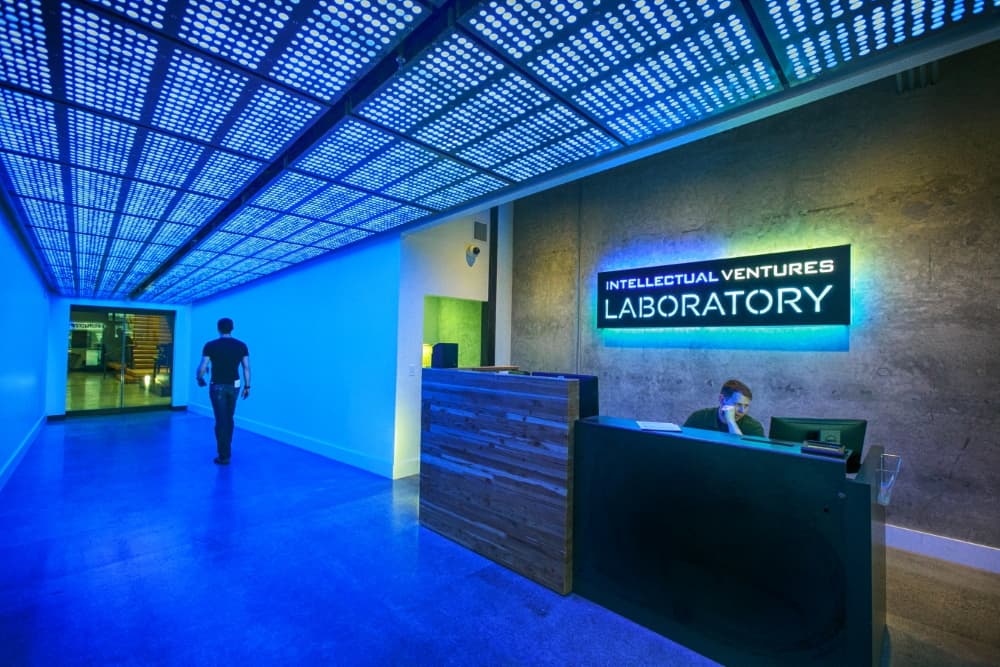
Innovation laboratory — LED environment & lab TI
Tenant-improvement electrical for an invention laboratory, including a programmable LED-lit reception environment and the power and controls behind advanced research and prototyping space.
Frequently asked
Questions buyers ask us
What makes laboratory electrical work different from general commercial?
Laboratory electrical work is built around the science. It combines dense bench and fume-hood power, dedicated circuits and clean grounding for sensitive instruments, emergency power for safety systems, and tight coordination with mechanical, plumbing, and controls trades. The margin for error is far smaller than in general commercial construction, which is why life-sciences facilities need a contractor with critical-environment experience.
Does H&M Electric build cleanrooms and controlled environments?
Yes. H&M installs cleanroom-rated power and lighting, sealed penetrations, and dedicated circuits and monitoring for ISO-classified cleanrooms, environmental chambers, and stability rooms. We coordinate the electrical scope with the mechanical, filtration, and controls trades so the space's classification is protected from rough-in through certification.
How do you power ultra-low-temperature freezers and cold storage?
ULT freezers, cryogenic storage, and cold rooms protect irreplaceable samples, so H&M provides dedicated, correctly sized circuits, standby power for units that cannot be allowed to warm, and alarm and monitoring connections that flag a temperature excursion before it becomes a loss. Redundancy and monitoring are designed in from the start.
Can H&M coordinate power for lab instruments and biomedical equipment?
Yes. Analytical instruments, diagnostic platforms, and research imaging carry exacting requirements for voltage, phase, connection type, grounding, and isolation. H&M coordinates directly with equipment vendors on those requirements and on installation sequence, so gear energizes on schedule and performs to specification.
Is life-sciences work related to H&M's healthcare experience?
Closely. Biomedical and life-sciences work shares the redundancy, clean power, and vendor coordination that define critical-environment healthcare, which H&M has delivered for over twenty years. It is its own discipline, built around laboratories, cleanrooms, and controlled environments, but it draws on the same critical-power depth.
Does H&M support GMP facilities and validated environments?
H&M builds and documents electrical work to support commissioning, qualification, and revalidation in GMP and validated environments. We favor flexible distribution so labs can reconfigure over time, and we keep circuit, grounding, and load records that support the validation process as spaces evolve.
Bid invitations & estimates
Planning a lab or life-sciences facility? Bring the electrical team in early.
We work with general contractors, healthcare facilities, developers, and property managers across Washington. Send plans and we'll respond quickly.